How Video Production Builds Brand Perception for Small and Mid-Sized Businesses
You Don't Have to Be A Coca-Cola-Sized Business to Look Like One
There are two sentences I hear on almost every sales call, sometimes both from the same person in the same breath.
"We're too small for something like this."
"Isn't video the kind of thing only the big companies do?"
I get why people believe it. Somewhere along the way, a good-looking video got filed in the same mental folder as a Super Bowl ad, something that belongs to brands with nine-figure marketing budgets and a boardroom full of people approving it. If you're a twelve-person manufacturer, a regional construction firm, or a nonprofit running on a skeleton staff, that folder feels like someone else's.
Here's what I've watched happen instead, over and over, across completely different industries. A business with no video at all puts out one well-made piece, and almost immediately, two different audiences reach the same conclusion at the same time, and neither of them has any idea what the budget was.
The two audiences, and the one thing they both say
The first audience is internal. It's the staff, the board, the founder who's been running this thing for fifteen years and has never seen their own work presented like that before. The reaction is almost always some version of the same sentence: look how professional this is, we've never had something like this.
The second audience is external, the clients, the donors, the people scrolling LinkedIn or Facebook who land on the video with zero context about the company behind it. Their reaction lands in the same place from the opposite direction: they must be a big deal, because only big dogs get videos like this.
Neither one of those reactions has anything to do with the size of the organization. Nobody watching a well-shot interview is doing mental math on employee headcount. They're responding to a signal, and the signal is simply this: somebody invested real time and craft into telling this story, and organizations that invest like that are usually organizations worth paying attention to.
That's the entire mechanism. It's not that video makes a small company look big. It's that video is a costly signal, something that takes real effort and real money to produce well, and human beings have always used costly signals as a shortcut for trustworthiness. We do it with a firm's office, a tailored suit, a well-built website. Video just happens to be one of the loudest signals available right now, and one of the few that most of your competitors still haven't sent.
Going from nothing to something
The jump that actually moves perception isn't from good video to great video. It's from no video to any video at all, done well.
Picture the handful of businesses in any given niche that are the obvious, established, we've-always-known-about-them players. Now picture everyone else: competent, capable, doing good work, completely invisible outside their existing client list. The gap between those two groups usually isn't quality of work. It's usually that one group has something that looks like proof and the other group is still trying to explain themselves in a paragraph of text.
A single well-made video closes a huge amount of that gap in one move. Before, a prospect reading your website sees words anyone could write. After, they see your actual people, your actual work, your actual voice, presented with enough craft that it reads as credible rather than homemade. You didn't need ten videos to make that jump. You needed one good one, because the leap from zero to one is the whole leap. Everything after that is refinement.
Why this isn't industry-specific
I used to think this mattered more for certain industries than others. It doesn't, really.
A manufacturer competing against a national brand for the same contract has the exact same perception gap as a local nonprofit competing against a major, well-known organization for the same donor's check. Neither one can out-budget the bigger name. Both of them can out-credibility them in a specific moment, the moment a decision-maker is comparing two options and one of them has a piece of video that makes the work real and the other has a PDF.
Construction and manufacturing clients tend to underestimate this the most, because the instinct in those industries is that the work should speak for itself. It should. It usually doesn't, not to someone outside the industry who has no idea what they're looking at on a job site. A recruiter watching a video of your crew talking about why they've stayed ten years understands your culture in ninety seconds. A paragraph about "company values" on a careers page does not do that work, no matter how well it's written.
Nonprofits feel this just as hard, arguably harder, because the entire ask is "trust us with your money or your time," and trust is exactly what a costly, well-made signal builds fastest.
The myth underneath both myths
"We're too small" and "that's only for big budgets" are really the same belief wearing two outfits. The belief is that video is an expense reserved for organizations that have already made it, instead of a tool that helps an organization make it.
That gets the order backwards. The businesses and nonprofits I've watched benefit the most from this were not the ones who waited until they felt big enough to justify it. They were the ones who used one well-made piece of video to start being perceived as the kind of organization that already belonged in the conversation. The perception came first. The scale followed.
Think of it less like a reward for success and more like a tool that pulls success forward. You're not documenting that you've arrived. You're building the proof before you've fully arrived, so that the next client, the next donor, the next hire looks at you and assumes you already have.
What this actually requires, and what it doesn't
To be clear about what I'm arguing here, because I don't want this to read as "spend whatever it takes." This isn't about matching a massive brand's production budget. It's about matching their level of intentionality on a much smaller scale.
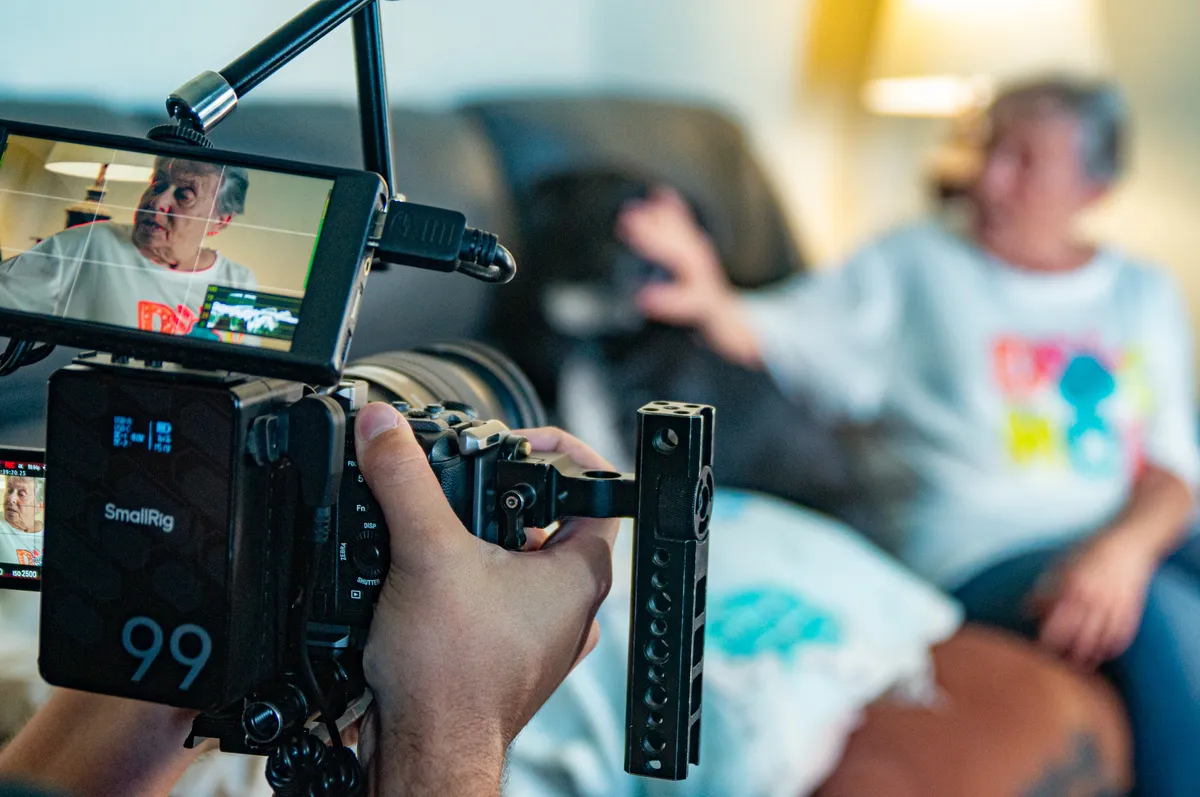
A Nike ad has a budget most businesses will never touch, and most businesses don't need to. What they need is one thing: a video built around a real story, shot and edited with genuine craft, that says something true about who they are. That's achievable at a real but reasonable cost for almost any established small or mid-sized organization. The ceiling on budget is enormous. The floor, the point where the signal actually starts working, is much lower than people assume.
What it does require is doing that one piece well instead of doing ten pieces cheaply. A business that produces a single strong video will out-perceive a business that churns out five mediocre ones, every time. The signal only works if the craft is real. A rushed, poorly lit, poorly shot video sends the opposite signal, that this organization doesn't actually invest in how it presents itself, which can do more damage than having nothing at all.
What changes once you have it
Once an organization has that first strong piece, a few things tend to happen at once.
Internally, people start treating their own work differently. I've watched staff who've done the same job for years suddenly talk about it with more pride after seeing it presented well on camera, because somebody finally framed what they do as something worth paying attention to.
Externally, the content gets used in places a text post never would have. It opens a conference. It plays at a gala. It gets attached to a grant application or a sales deck. It becomes the thing a referral partner sends instead of explaining you themselves.
And competitively, you stop looking like the smaller option in the room. You start looking like the obvious one. Not because you became a different size, but because you stopped looking like you were still trying to prove you belonged.
You don't need Coca-Cola's budget. You need one real story, told well.
If there's one thing I'd want a marketing director or executive director to take from this, it's that the size of your organization was never actually the barrier. The barrier was believing that video is a reward for businesses that have already made it, instead of one of the fastest tools available for becoming the business people assume already has.
You don't need a national ad budget. You need one true story about your people or your work, told with real craft, put in front of the people who need to see it.
Let's find your story
Digital Sonder is a story-driven video production company based in the Fort Worth area, working across industries, from manufacturing and construction to nonprofits and professional services, who are ready to look like the established name in their space, not the one still trying to prove it.
If you've got a story worth telling and you're ready to find out what one well-made video actually does for how people see you, let's talk.


